
Was Agent Smith Right?
We all missed the most important message from The Matrix

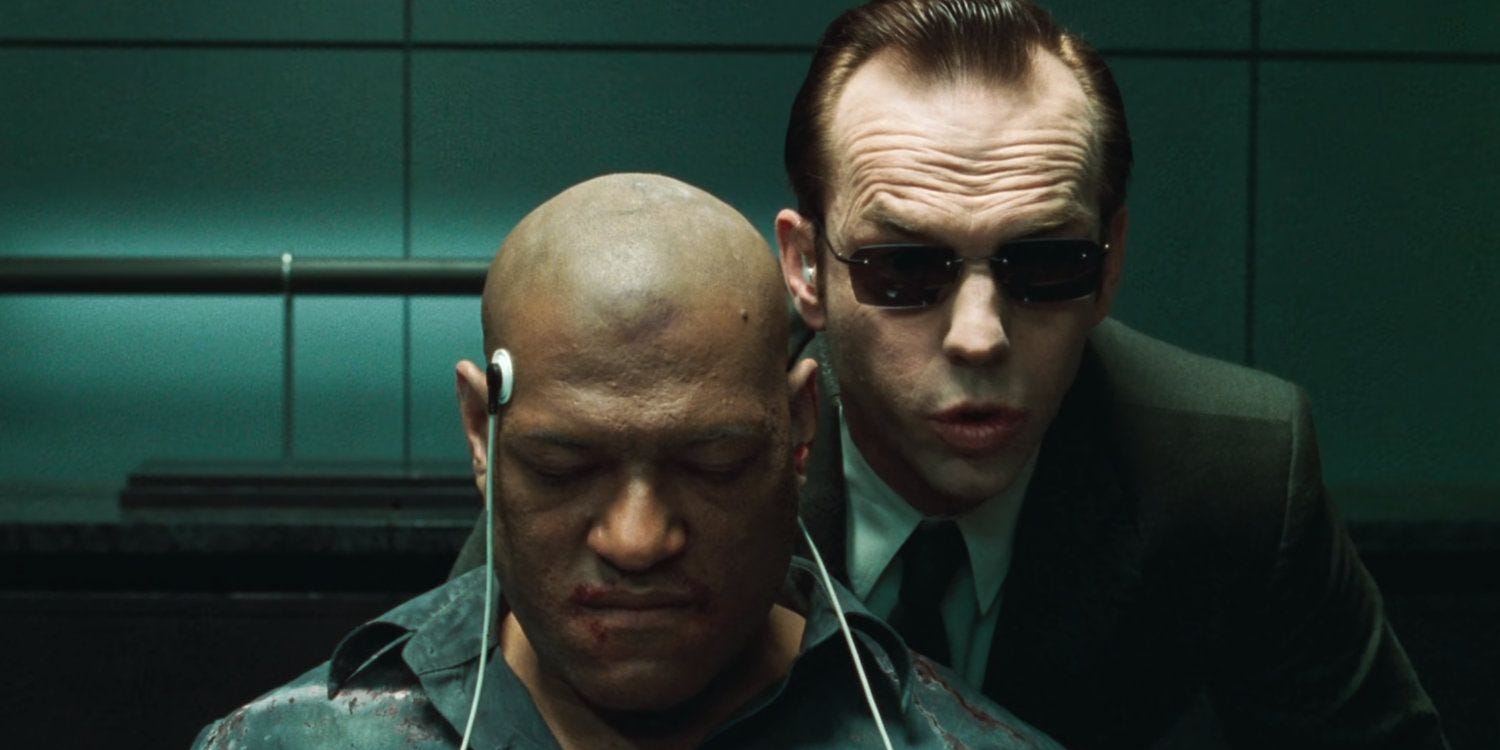
“I’d like to share a revelation that I’ve had during my time here. It came to me when I tried to classify your species. I realized that you’re not actually mammals. Every mammal on this planet instinctively develops a natural equilibrium with the surrounding environment, but you humans do not. You move to an area, and you multiply, and multiply, until every natural resource is consumed. The only way you can survive is to spread to another area. There is another organism on this planet that follows the same pattern. Do you know what it is? A virus. Human beings are a disease, a cancer of this planet, you are a plague, and we are the cure.”
In the movie The Matrix, the character of Agent Smith confronts Morpheus, the leader of the human resistance, with this monologue. Interestingly, the topic of “humans as a cancerous virus” doesn’t come up again in the rest of the movie. There is no refutation to this statement. No pushback to it. It is a powerful argument if you figure that the movie takes place in a future after a fight between humans and artificial intelligence left the world mostly uninhabitable. With authoritarian movements gaining ground in multiple democracies, the global economy straddling a razor’s edge, and climate catastrophe an inevitable apocalypse, it might be helpful to take Agent Smith’s accusation seriously.
Was Agent Smith Right?
He was.
And he wasn’t.
What Agent Smith is describing is an invasive species, not a virus. In that sense, he’s not wrong. In this essay I make the argument that humans are an invasive species.
What he is wrong about is that humans are not unique when it comes to acting as an invasive species.
Invasive Species R Us
People think that there is something special about invasive species; that they are somehow inherently pernicious or morally bankrupt. That’s not true or particularly fair. Life on Earth™ wants to reproduce as much as it can and consume as much as it can. When introduced to a new environment where food is available and predators are not present, a living organism will increase in population until that environment can no longer support that population’s increase. In other words, the majority of life on Earth is potentially an invasive species.
Examples of this behavior span across all branches of the tree of life.
Single celled organisms - Antibiotic-resistant strains in hospitals
Fungi - chytrid fungus has decimated amphibians around the world
Plants - Kudzu, Japanese knotweed
Invertebrates - Zebra mussels
Vertebrates - Guam’s Brown Tree snakes
This doesn’t mean that all living things ARE invasive species. It means that most have the potential to be if the conditions are right. Agent Smith was wrong to say that humans are ‘unique’, but correct to imply that humans are an invasive species.
To understand the truth of Agent Smith’s claim, we need to take a hard look at human behavior, understand what invasive species actually are - and see if humans fit the definition.
Humans Are Good at Being Bad
Humans have been bad for a long time.
Palaeoecological studies have shown that over the past 4k years humans have significantly increased soil erosion in the Alps.1 Polynesian arrival on the Hawaiian Island of Kaua’i completely transformed the native ecology - either destroying or diminishing the island’s flora and fauna.2 There are signs that 12k years ago in North America humans contributed to the extinction of a number of megafauna.34 The dwarf elephants and hippos of Cyprus were made extinct 10,000 years ago.5 And of course Easter Island (Rapa Nui), the site of the most dramatic case of deforestation by humans of which we’re aware.6
Across many cases spanning multiple continents, time periods (going back to the first cases of human migration), and ecosystem types, a pattern emerges: wherever humans arrived - whether as hunter-gatherers or agriculturalists - they consistently transformed ecosystems, drove extinctions, introduced non-native species, and altered landscapes at scales unprecedented for a single species. This is the rap sheet of an invasive species.
Key to our understanding of ourselves as a species is to appreciate that many of the instances we just identified as invasive occurred well before modern civilizations developed. For many of us, when we recognize humankind’s dysfunctional behavior, we want to blame it on a rupture with nature - humans were previously in an equilibrium with our environment and that communion was upended with the advent of the modern world. The “noble savage” myth. This can be comforting for those of us looking for an answer to the inscrutable pathology of modern Homo sapiens. We think that if that rupture with nature was the fault of some aspect of the modern world, then if we can identify the cause of that rupture, we should be able to roll back the changes. We hope to call back to an earlier version of ourselves and reclaim our legacy of environmental stewardship and natural harmony. It is a comforting fiction, but one which is disproven by the evidence. Prehistoric humans were just as disruptive and destructive to their environments as modern humans, but at a smaller scale and lessened intensity.
I titled this section Humans are Good at Being Bad, but that was just my way of giving you a sly sidelong wink in regards to our collective sins. The archaeological and palaeoecological record identifies the thumbprint of invasive species all over pre-civilization human behavior. As a result we don’t have an easy story to tell about external factors to resolve or villains (like Agent Smith) to fight against. Like the majority of species on this planet, we are hardwired to operate on invasive-mode. The drivers of our behavior are internal. These drivers need to be acknowledged if we want to get at the root of our collective dysfunction.
When Does it Get Invasive?
Let’s get to my definition of invasive species and what it is that makes humans unique among them.
Natural ecosystems are typically environments where local flora and fauna co-evolve together over time. As a result each organism pursues its own unique approach towards evolutionary fitness along with all the other organisms in that neighborhood. These approaches are all pretty much the same if you boil it down: eat as much as you can and procreate as much as you can. We’re familiar with the “circle of life” equilibrium that results. This is a generalization, but it captures the core motivations of any organism in a resource-rich environment.
In the case of a stable environment the equilibrium is arrived at over the course of many generations. It is the interdependence of positive (food to eat) and negative feedback (predators who cull the herd).
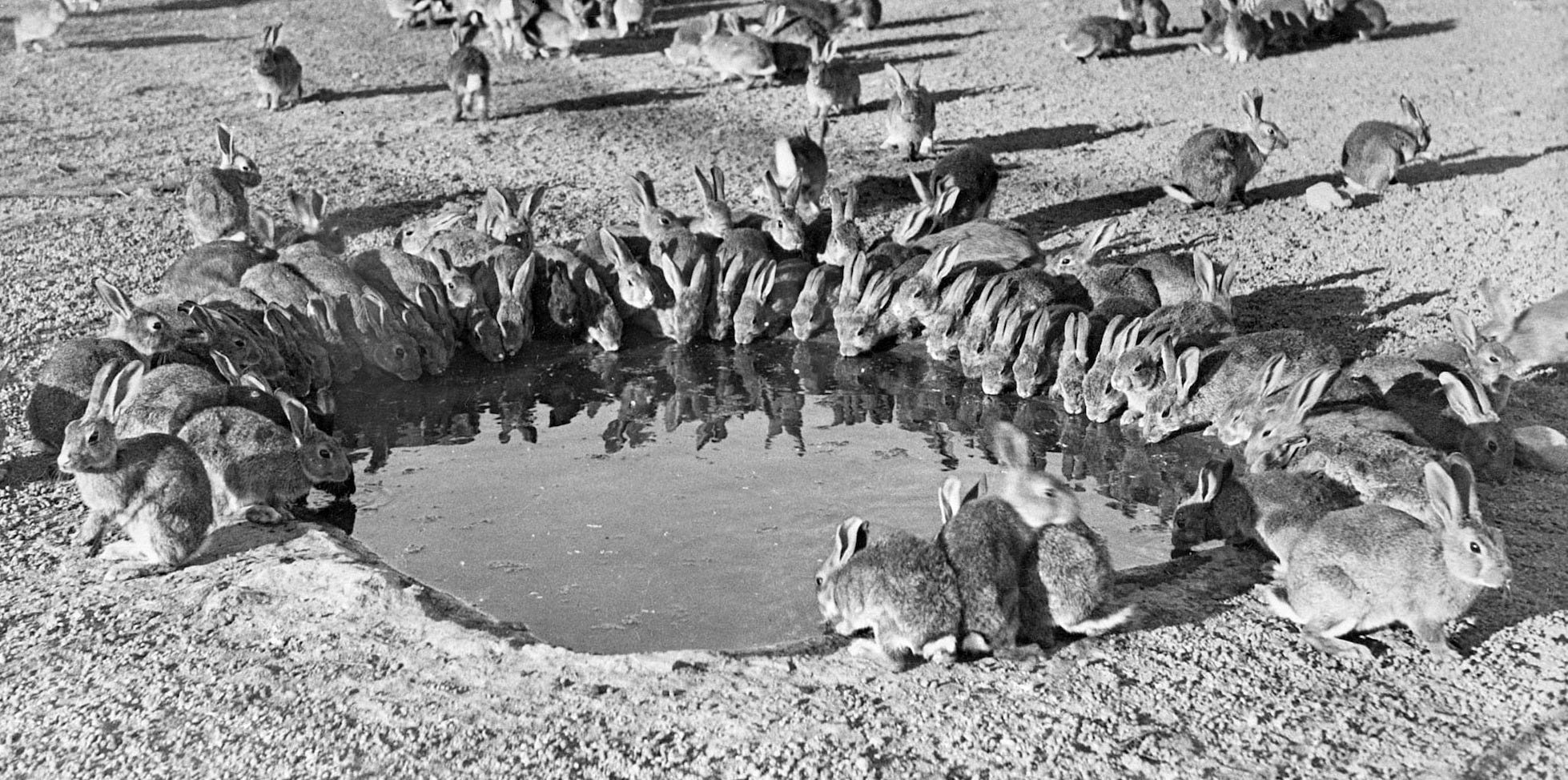
Things get invasive when an organism is introduced into a new environment - an environment that provides unchecked positive drivers (accessible food, suitable climate) but lacks the negative feedback (predators, pathogens) to restrain population growth. Rabbits in Australia exemplify this dynamic.
Introduced in 1859, 24 wild rabbits were all it took to seed an invasion of continental consequence. Release from regulatory constraints for the rabbits included: ideal climate, abundant food, and soil where they could build their warrens for shelter. Negative feedback from predators that might have restricted their population growth was absent, in part because human intervention had decimated the existing population of potential predators such as the dingo. The resulting population explosion of rabbits has resulted in the endangerment of over 300 native plant and animal species and cost Australians hundreds of millions of dollars in lost revenue every year.
We see that an invasive species takes advantage of the unfettered gifts of an environment while avoiding its negative feedback. As a result it gives the invader an advantage over native species who have to contend with the natural negative feedback it has co-evolved with. In this way, invasive species undermine the equilibrium of an environment they are introduced to.
This is all characteristic of invasive species, but what is it that makes humans unique?
A League of Our Own
So, humans aren’t special when it comes to how we operate when we discover a juicy new ecosystem. We expand our population and take over the landscape just like a rabbit or kudzu would. But what makes us special is our relationship to negative feedback.
We don’t just take advantage of the absence of negative feedback, we actively remove negative feedback from our environment. We build shelters from the elements, we transform natural landscapes - through agriculture - into surplus food production. We eliminate all the animals and plants in an area we don’t like. We pave roads to make travel more convenient. The list of transformations could go on forever.
Where invasive species typically succeed because negative feedback is absent, humans succeed because we make it absent. We do not wait for the predators to be missing; we kill them. We do not wait for the climate to be suitable; we modify it. We do not wait for resources to be abundant; we extract them, distill them, exhaust them.
No other animal comes close to the capacity humans have to completely transform our environment. In every case the point of the transformation has been to remove the limiting factor of the environment’s negative feedback. And this is the special sauce of human success; our holy grail of evolutionary advantage. Our unprecedented innovations in the use of tools has empowered us to circumvent all the guardrails nature has put in place to limit growth.
We are actively invasive in our relation to our default environment. Where other species - introduced to a novel ecosystem - follow a gradual gradient of expansion, we bulldoze the gradient flat. Unlike the rest of the natural world, we adapt the environment to us.
Let’s zoom in to take a look at invasive species at the ground level. We’ll see what they do to a place a person loves.
A Walk Through the Woods
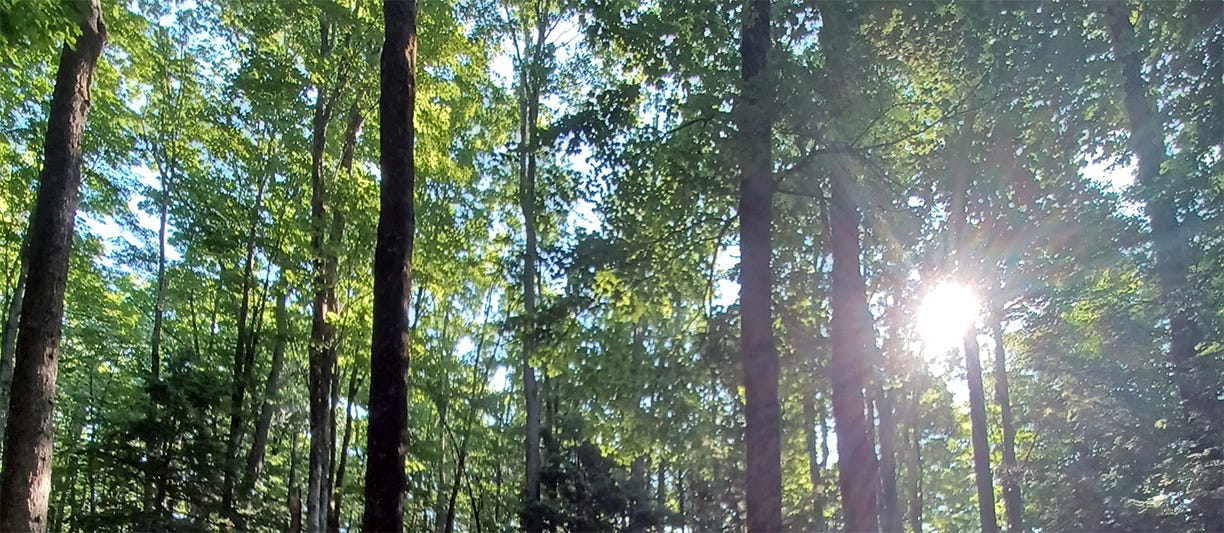
I live in a very urban environment and I like to go walking for a few miles every day. There’s a large in-city forest near enough that I can drive there or ride my bike sometimes.
That walk in the woods has been a life saver. There is something subtle but undeniably rejuvenating about being in the midst of all that leafy green life slowly drinking in the energy from our star. It feels comforting and powerful to be away from bricks and asphalt and distant enough from cars so their constant hiss can’t be heard.
The past couple years have been a little different, though.
I started noticing there were sweeping waves of ivy that covered whole areas of the wood as a dense blanket of leaves. It formed a shroud that conformed to the general shape of the large and small trees it climbed up. “That can’t be good,” I thought. It was around the same time I noticed patches of Japanese knotweed staggered along the path through the forest that I loved to walk. “Uh oh.” Knotweed is real trouble. I found out about it years ago when a friend hired me to clear it out of her backyard. That stuff is insane. It grows everywhere and is impossible to get rid of.
I love my woods. I was worried about the knotweed and the ivy. But, I also thought that things would be fine. What do I know? What do I know about nature or the woods or invasive species? I’m sure it will all work itself out, right? “Balance of nature” and all that.
Knot to Worry
Surely, I thought, the state of Pennsylvania Department of Agriculture will be able to do something about this!
I sent a ‘to whom it may concern’ email to the address I found on the state website. Surprisingly, the next day I received a response from Trilby.
While Japanese knotweed is a state Class B noxious weed, we do not enforce or do work with Japanese knotweed currently due to the large amount of populations across the state. English ivy is not a state noxious weed in PA, and we work with a limited number of noxious weeds only.
Huh. That seemed confusing. If you classify it as a ‘noxious weed’ (whatever tf that means) wouldn’t you want to ‘enforce’ or ‘do work’ to eradicate it or keep it from spreading and destroying a forest? And why isn’t English Ivy a ‘noxious weed’? Tell that to the trees in my forest that it’s strangling to death.
Except I started doing research for this essay about the effects of invasive species. That was when I came to the conclusion, “No.” I said to myself as my heart began to race, “No, it is not going to work itself out. I’m going to lose my forest.”
Invaders Ascendant
Estimates are that invasive species cost the US 120 - 140 billion per year. Since 1960 they have cost the US at least 1.22 trillion dollars.7 I translated what Trilby had written me: “the weeds won”. There’s so much knotweed that the best the state thinks it can do is to demand that when people find it on their property, they keep it from spreading. Not get rid of it. Contain it. Trilby was an emergency room doctor administering triage to an emergency room patient.
The fight is over. The invaders are inside the walls. Our government has ceded territory to the weeds. According to the bureaucrats, it isn’t a priority to put the time, money, and effort into eradicating invasive species. We could fight back, but we don’t. We’re just told it just isn’t cost effective. We’re told there isn’t enough return on investment.
Cascading Catastrophe
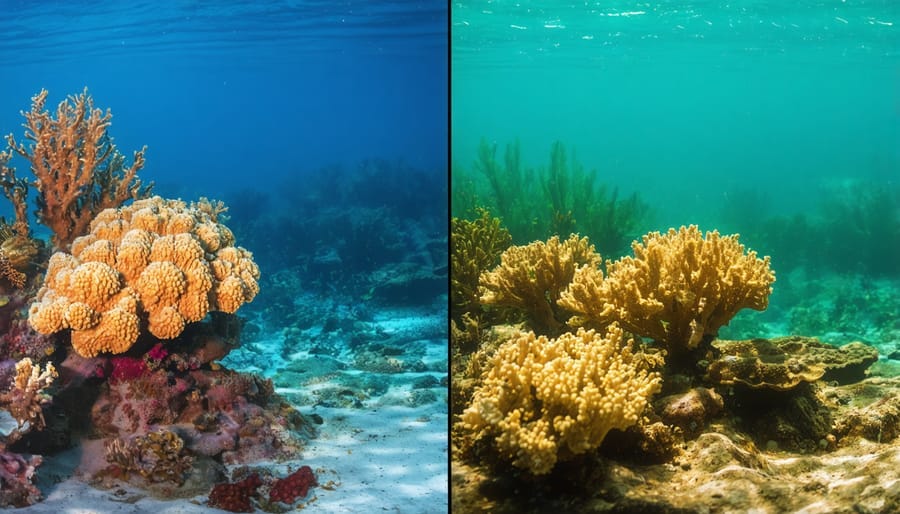
The money lost to invasive species is gargantuan, but consequences of an invasion are far more than economic. That trillion dollar number in the last section is a stand in for a Mt. Everest sized flashing light to let you know the situation is dire. But a number doesn’t get to the ground level of what happens to an environment when it is attacked by invaders.
The ecosystem an invasive species takes over gets dumbed down. Living creatures that have taken hundreds of thousands of years to come into a relatively stable equilibrium are massacred in a cascade of interdependent decimation. Like the Japanese knotweed in my forest, the majority of invasive plant species are allelopathic. They poison the soil they grow in. They literally salt the earth for other plant species. Not only do they have a competitive advantage from an absence of predators, they make it harder for native plants to grow. Invasive species contribute to 60% of recorded global extinctions and are the sole cause in 16% of cases.8
An alien invasion causes:
Food chain disruption - the invader diminishes or destroys a link of the ecosystem’s food web and the cascade from that absence reduces dependent species
Habitat destruction - the invader makes it unusable by the species evolved to live there
Human destabilization - the invader pollutes clean water, destroys crops and fisheries, and erodes heartland (like my woods)
Mutualism collapse - species interdependence is undermined when an invader attacks the very relationships that species rely upon to survive.
It makes me sad to think about, but my wood is lost to me. Maybe not in my lifetime, but soon it will lose the characteristics I know and love. The reason for that loss is when negative feedback from the environment is removed, most species will cause havoc in the environment they invade.
With that in mind, it is time for us to revisit Agent Smith and the question his monologue begs.
Was He or Wasn’t He?
Well, we defined what it means to be an invasive species. So, what’s the result? Was Agent Smith right to accuse us?
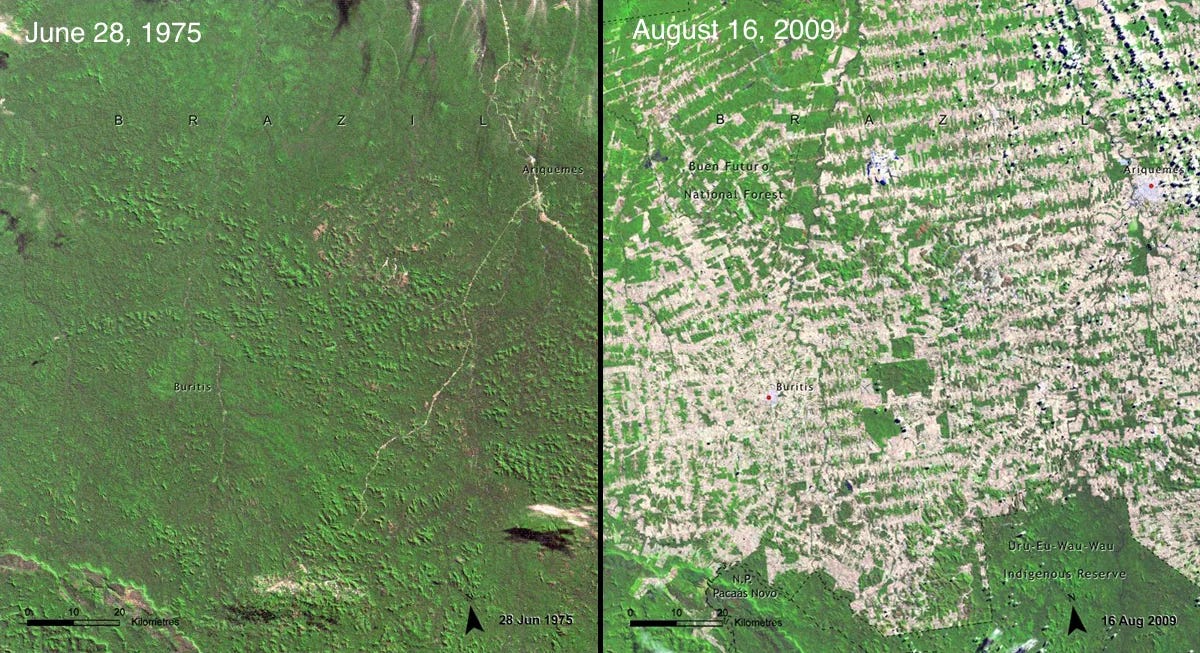
He was right that humans behave like an invasive species. The evidence speaks for itself: we expand, we consume, we transform, we destabilize. From the Alps to the Amazon, from the Australian outback to the island forests of the Pacific, the pattern is unmistakable - an algae bloom across the ocean of our past.
But he was wrong to accuse us of being unique among living creatures. We are not the only species to act this way, but we are the only species to do it deliberately, systematically, and with full awareness of the consequences.
Agent Smith was also wrong to call us a virus - a force of pure destruction with no capacity for self-awareness. Viruses do not grieve their hosts. They do not walk through the woods and mourn the ivy-choked trees. They do not write essays or send emails to bureaucrats. We do all of these things. We are an invasive species by nature, but we are also the only species capable of reflecting on that nature - of seeing ourselves as both the most destructive force the world has ever known and as beings capable of creativity, healing, and recognizing the sublime. We are uniquely burdened with this paradox.
The question Agent Smith never asks - the question that hovers Damoclean above the rest of the movie - is what happens when the invasive species becomes aware of its own invasiveness.
I believe that Agent Smith is literally the manifestation of our own capacity for destruction. Our thirst for it. The optimization of our self-destructive drive to consume.
In The Matrix, the final conflict is a battle between two characters: Agent Smith - the apotheosis of our lust for destruction - and Neo - an everyman who is rescued from death’s door by love.
It sounds overly sentimental, but it works.
Neo dies when he fights Agent Smith on Agent Smith’s terms. His resurrection through love is the template for the only possible resolution to the conflict: hold the drive to destroy alongside the will to love and continue to act.
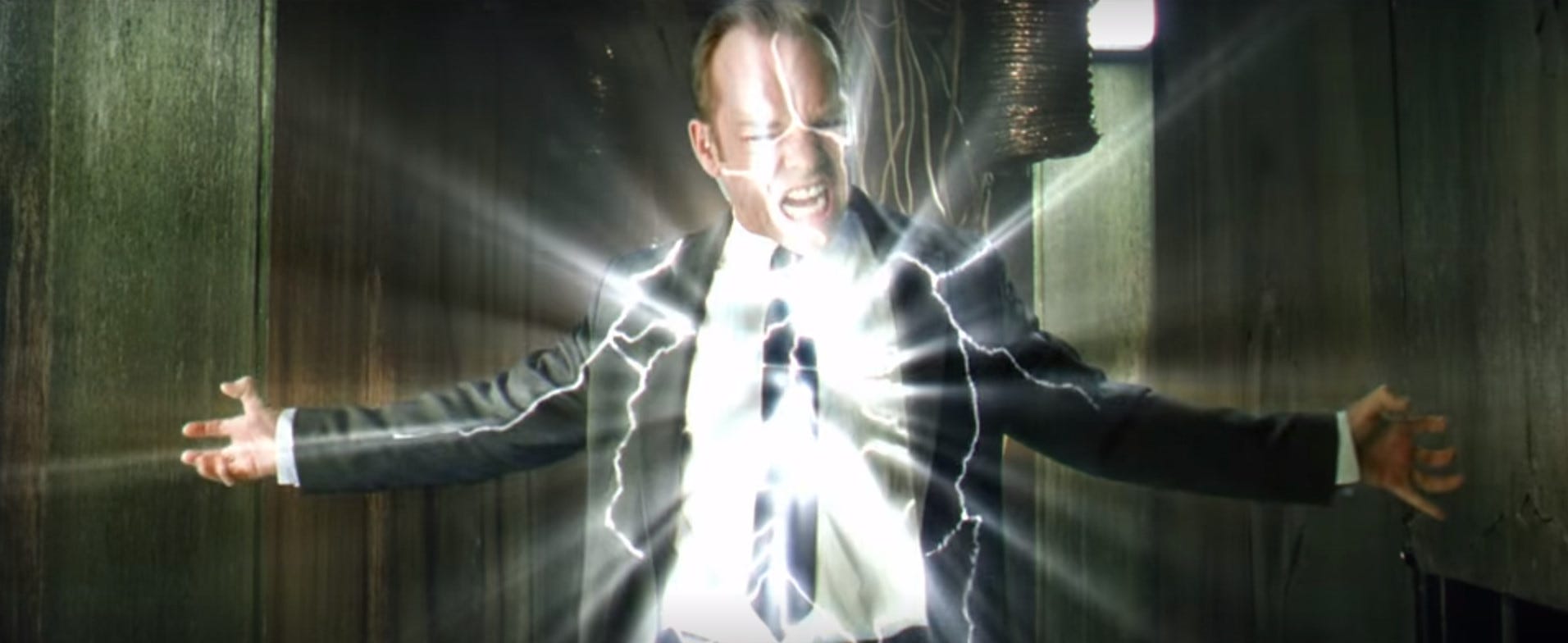
Upon further review, I do think there is an important wisdom behind the Hollywood flash; the gunfights, the explosions, the kung fu. We are unique in our destructiveness. We are a force of nature - like an asteroid or a volcanic eruption - but unlike an asteroid, we have the capacity to be conscious of both our awesome destructive power and our sublime preciousness. These contradictions are uncomfortable to hold. Most of us turn away because the truth is too terrible to bear. But our salvation lies in accepting that both things are who we are. It is Neo integrating with Smith - not defeating him, but identifying with him, and choosing to act anyway.
I know that walking through my forest, watching the knotweed spread and the ivy climb, I am no longer pretending that it will all work itself out. The equilibrium of nature I knew is not coming back. The bureaucrats are not going to save us. The economy is not going to prioritize preservation over growth.
I don’t have an answer. I have clarity about what we truly are - and clarity is the first step toward forgiveness. It is being present. It is bearing witness. And when I act, I act with care, knowing that care is rooted in love.
https://www.nature.com/articles/s41467-024-45123-3
https://repository.si.edu/items/fb411c36-e179-4687-86ee-585329042f50
https://www.researchgate.net/publication/226952254_Estimates_of_Clovis-Era_Megafaunal_Populations_and_Their_Extinction_Risks
https://www.nature.com/articles/s41467-018-07897-1
https://earthsky.org/human-world/dwarf-hippos-and-elephants-extinct-due-to-humans/
https://ecologiclife.com/how-did-deforestation-occur-on-easter-island.html
https://www.sciencedirect.com/science/article/pii/S0048969721063968
https://iucn.org/blog/202506/invasive-alien-species-their-impacts-ecosystems-and-human-well-being
Although it is certainly true that some Indigenous cultures destroyed their natural habitat it is not the case that this behaviour was (or is) universal.
The native inhabitants of Turtle Island seemed to maintain their biodiversity for the many thousands of years from the time the Aleutians first entered the land up until the Europeans came to steal & destroy everything.
Many Indigenous cultures recognise the vital importance of stewardship in respect of natural resources and warn of the dangers of unchecked greed & accumulation. Wetiko, wendigo, and pleonexia are all examples of pathological behaviour identified by ancient cultures with more wisdom than our own.
It’s interesting that the bad guys were telling the truth and the humans perpetrating all the horrors since they learned to walk on two, were the resistance, the good guys, those who truly know what’s going on, the sacrificing heroes, fighting for the future of the human race. That self delusional script has been around for a long time and playing on a continuous loop.